22 / 32
Replacing the saddle on my 20 year old guitar
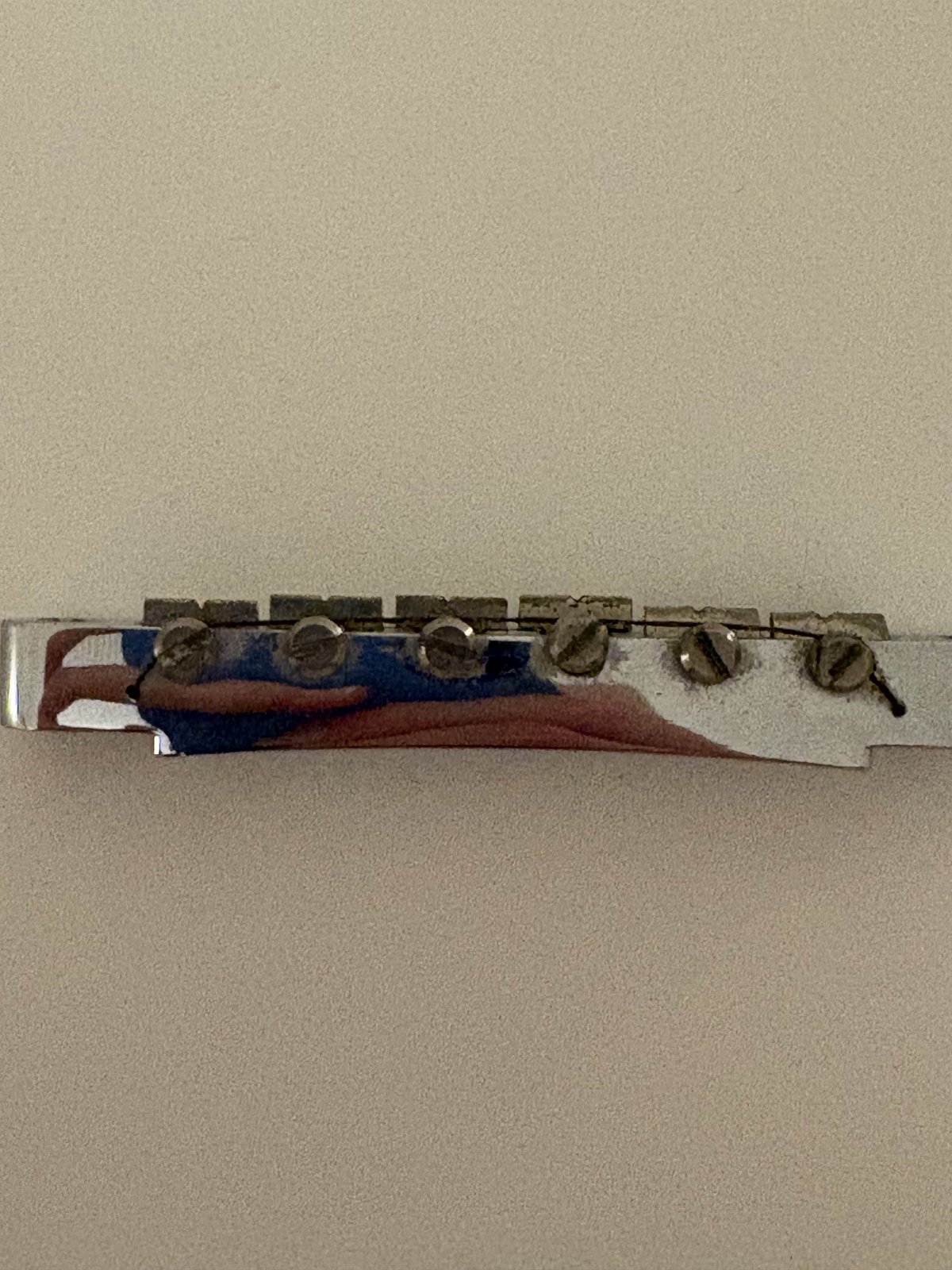
I've owned this guitar for 20 years and it never sounded right, and I was always afraid of servicing it myself, so it went through countless shops instead. I finally took the matter into my own hands and found that one of the saddle posts had been filed way too deep. Replacing the whole saddle with one from a different brand fixed the intonation, the action and a buzz all at once, and the guitar feels brand new.
Description
I've had this guitar for 20 years and it never sounded right. I was always afraid of servicing it myself, so it's been in countless shops instead. I finally took the matter into my own hands and noticed that one of the saddle posts was filed way too deep. I replaced the whole saddle, with one from a different brand, and that fixed the intonation, the action and the buzzing. It feels brand new.
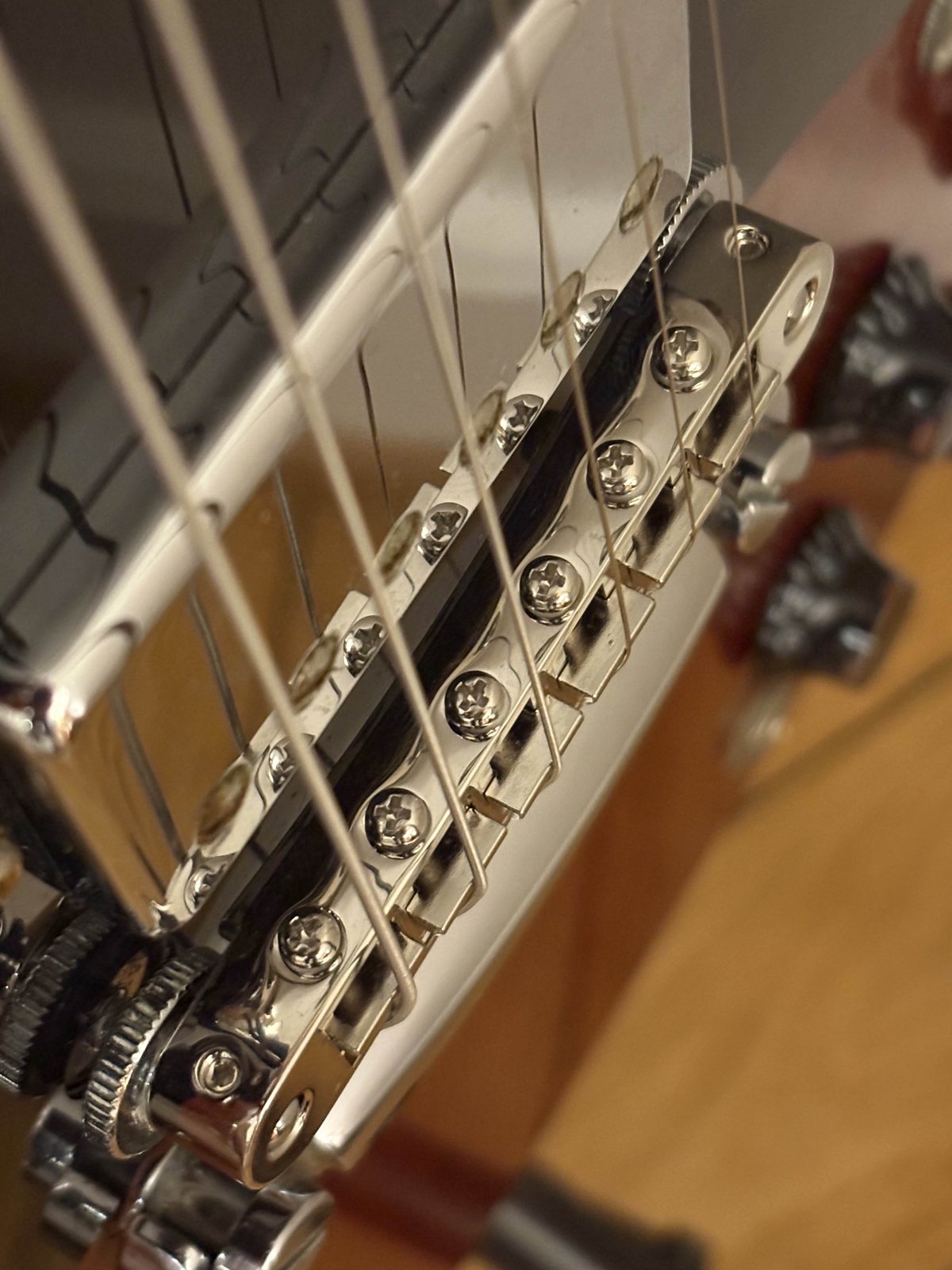
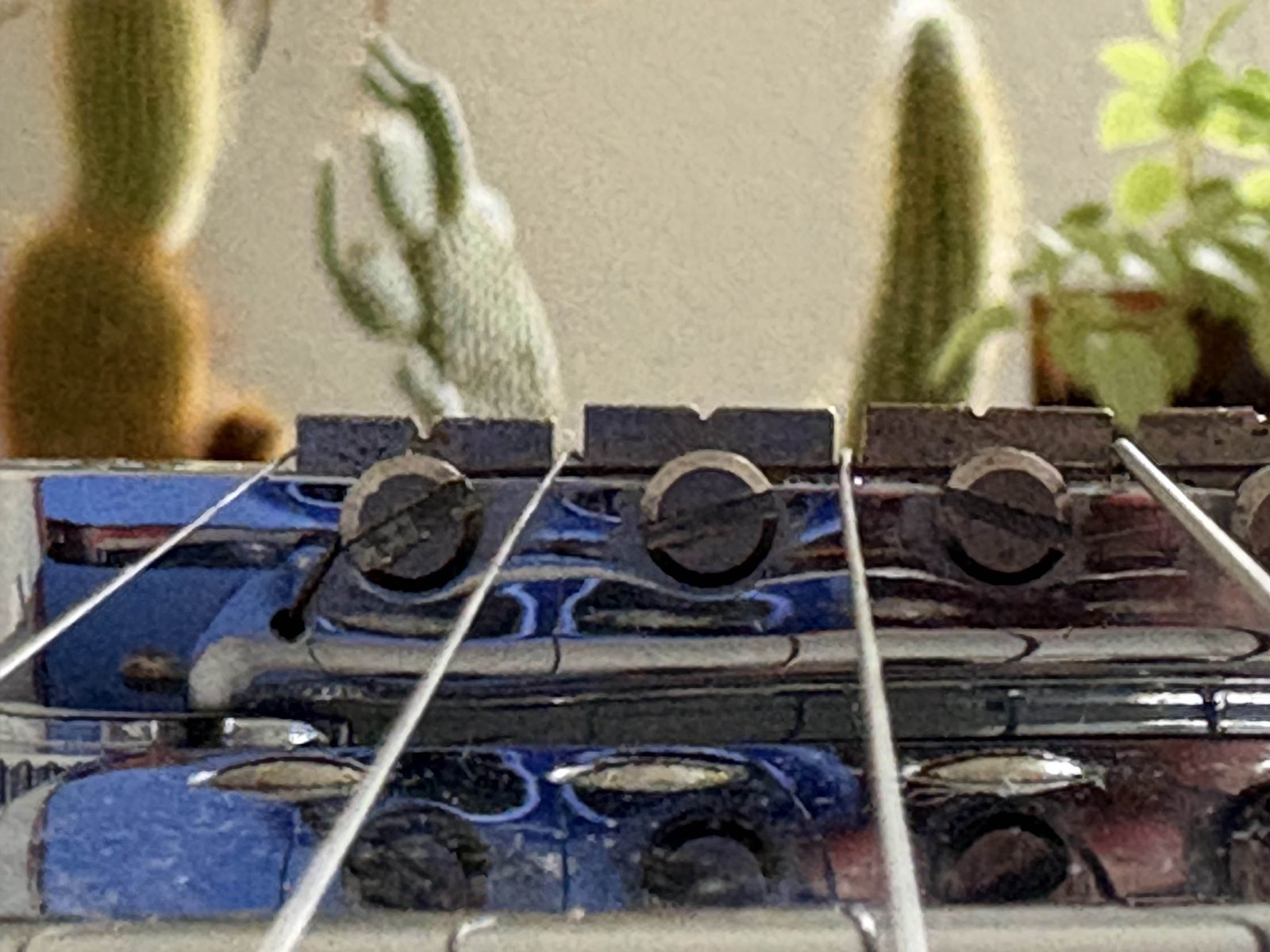
I was trying to fix both the action and the intonation, neither of which had ever been right, and I also noticed a buzz that turned out to be the string touching the intonation screw. The string sat so low geometrically that when strung it would touch the screw. In the first picture the strings aren't seated on the saddle because I'd taken them out to work out why the E string was so low, and you can see the slot had been filed much deeper, for reasons I don't understand.
The screw only moves the saddle closer or further, making the string effectively shorter for tuning the intonation at the 12th fret, so it doesn't lift the string. The distance from the slot and saddle post to the body and fretboard is set elsewhere, and there the whole saddle moves, following the neck's radius. That photo is terribly confusing, I agree, it looks like a fever dream in a desert.
I don't think the saddle was rotated 180 degrees when I got to it, but I suspect it might have been at some point, since the slots on the other side are very clearly wider. It's possible someone, even me, put it on the wrong way and the fat E string carved a path for itself.
Gallery
2 images